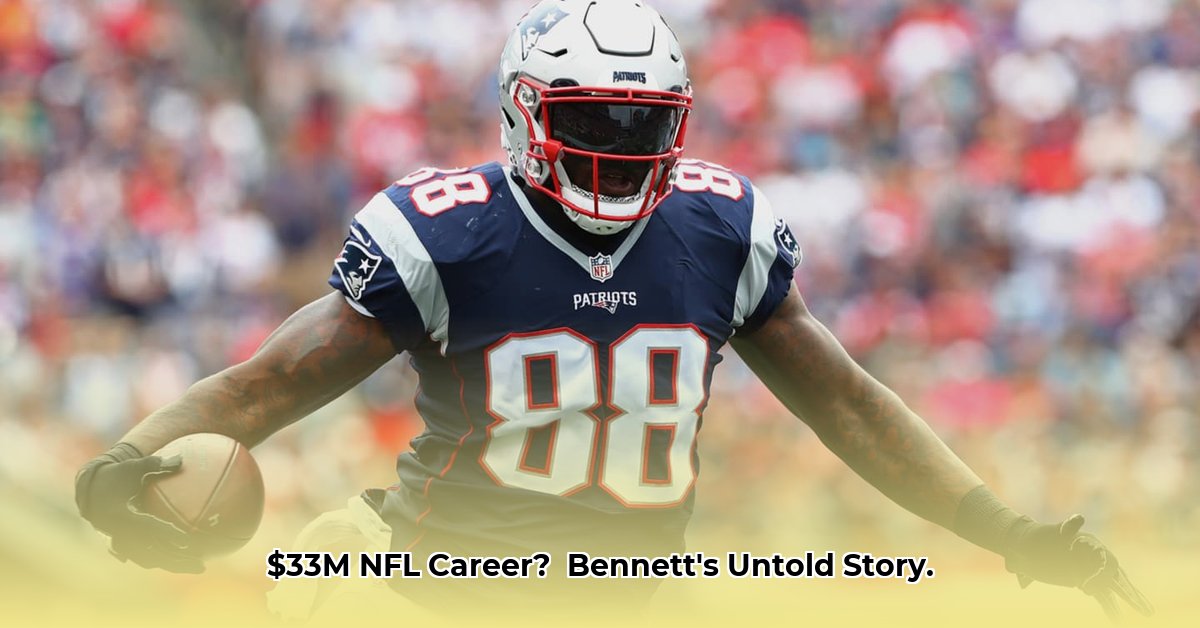
Martellus Bennett's NFL career wasn't just a series of touchdowns and tackles; it was a complex financial narrative spanning a decade and totaling over $33 million. This journey, however, wasn't a steady climb. His earnings, like many NFL players', fluctuated wildly, reflecting the unpredictable nature of the league and the intricacies of contract negotiations. This article delves into the details of Bennett's contracts, comparing them to league averages and exploring the factors that influenced his financial success—and occasional setbacks. For a deeper dive into his net worth, see Bennett's Net Worth.
A Tight End's Financial Rollercoaster: From Rookie Deal to Multi-Million Dollar Contracts
Bennett's path to NFL riches wasn't straightforward. His career, marked by time with the Dallas Cowboys, New York Giants, New England Patriots, Chicago Bears, and Green Bay Packers, saw his compensation shift dramatically from year to year. This wasn't simply due to his on-field performance; market conditions, team needs, and the inherent risks of the NFL also significantly impacted his earning potential. Let’s examine the key financial milestones of his career.
Decoding the Contracts: Year-by-Year Breakdown
While precise figures for every contract remain elusive due to the private nature of NFL contract details, we can piece together a clear picture of Bennett's financial journey. The following table presents an approximation of his career earnings, highlighting the substantial differences in contract values across different teams and years.
Note: The data presented below is compiled from publicly available information and may not capture all aspects of his compensation, such as potential performance-based incentives.
| Team | Years Active | Approximate Total Contract Value (USD) | Key Contract Features |
|---|---|---|---|
| Dallas Cowboys | 2008-2009 | Undisclosed (Rookie Contract) | Standard rookie contract with limited guaranteed money. |
| New York Giants | 2010-2011 | Undisclosed | Likely modest salary increases reflecting early career progression. |
| New England Patriots | 2012 | Undisclosed | Short-term deal, potentially a "prove-it" contract. |
| Chicago Bears | 2013-2015 | Undisclosed | Significant increase reflecting improved performance and market value. |
| Green Bay Packers | 2016-2017 | ~$24,965,000 (Estimate from OverTheCap) | Largest contract; substantial guaranteed money and potential for additional incentives. |
| New England Patriots | 2017 | Undisclosed | Released before a substantial portion of the contract was paid out. |
Wasn't Bennett's Green Bay deal significantly higher than his previous contracts? Why this dramatic increase?
Beyond the Base Salary: Unpacking the Full Compensation Picture
The figures presented above primarily represent the base salaries included in Bennett's contracts. However, NFL contracts are complex documents that often include a variety of additional compensation elements. These can significantly increase a player's total earnings, including signing bonuses, roster bonuses, workout bonuses, and performance-based incentives (touchdowns, receptions, etc.). These additional sources of income are often not publicly disclosed and therefore are difficult to factor into a precise calculation of career earnings.
Benchmarks and Comparisons: How Did Bennett's Earnings Stack Up?
To fully grasp the significance of Bennett's earnings, we need to compare them to those of his peers. While precise data across all tight ends over his career isn't readily available, his Green Bay contract suggests he was highly sought after at his peak. However, factors like injuries and team performance can drastically influence a player's earning potential. The variability of his contract values across different teams highlights the dynamic nature of the NFL market and the constant negotiation that shapes a player's financial trajectory.
The Human Element: Performance, Risk, and Market Forces
Martellus Bennett’s financial story isn't simply a list of numbers; it's a reflection of a dynamic career. His earnings fluctuated due to various factors: his on-the-field performance, the demands of the NFL market, the risks inherent in a physically demanding sport, and the negotiations surrounding his contracts. A strong season often translated into a more lucrative deal the following year, while injuries or significant changes in team dynamics frequently impacted his earnings. His journey serves as a compelling example of the complex interplay between athletic talent, financial strategy, and the unpredictable nature of professional athletics.
Conclusion: A $33 Million Lesson in NFL Finances
Martellus Bennett’s career earnings, while impressive, offer a fascinating illustration of the financial challenges and opportunities faced by NFL players. His story underscores the critical importance of understanding not only the base salary but also the multifaceted nature of NFL contracts and the influence of market forces, performance, team circumstances, and the ever-present risk of injury.
Key Takeaways:
- Bennett’s career earnings, while substantial, showcase the variability inherent in NFL compensation.
- Guaranteed money in NFL contracts plays a vital role in mitigating the financial risks associated with injury.
- Performance-based incentives can significantly boost earnings, but their realization depends on various factors beyond a player's control.
- Analyzing a player’s compensation requires a nuanced understanding of contract terms, market value, and the unpredictable dynamics of the NFL.